
Corrosion
Corrosion is one of the most difficult of issue to analyse as it can be caused by any number of events, material issues or problems which may well be unrelated to a particular vessel but can be caused by adjacent vessels or from the Marina power supply itself.
In addition the problem may have been caused over an earlier period and is only detected some time later when an owner has a chance to inspect the vessel.
Welding on a steel vessel anywhere nearby for example - will cause immediate and severe corrosion to any underwater components on other vessels.
One cannot conclude that because corrosion is now apparent that it is being caused by a situation that exists today.
The whole topic of corrosion is one of extreme complexity on which many have spent their life's work and cannot be summarised in a few lines.
Stainless steels - of which there are literally hundreds of different grades - can suffer from a number of quite different corrosion causes. Crevice corrosion - where the lack of oxygen can prevent an oxide layer forming leading to corrosion of a surface. Stress corrosion where a metal under stress can exhibit corrosion.
Electrolytic corrosion can be casued by two dissimilar metals generating a voltage between them leading to a current flow and subsequent corrosion. A Zinc or lack thereof may be a solution to this type of issue.
If corrosion is detected on a vessel it is best to use an acknowledged expert who has the appropriate instrumentation to take actual measurements of the vessel in it's berth. Then and only then can one start to make rational judgements as to the cause of the problem.
Modern Marina's today use RCD or Residual Current Devices to provide safety protection to vessels with onboard power. Isolating transformers previously performed this function but they were heavy, bulky and expensive but they did isolate the circuit entirely. RCD's offer a common earth route back to the Marina head which can include passage via various vessels. This again is a topic of some complexity but was well documented in " Professional Boatbuilder " as an issue some months ago.
To illustrate some of the complexities - many will make the statement that by having a flexible coupling they have " isolated " the shaft from any connection to the engine, when in electrical terms they have simply installed a very high resistance that simply forces any leakage current to find alternative routes to the shaft and propeller and perhaps then via seawater to the gounding at the head of the marina. To an electron - the salt water in the cooling pipes to the engine are a superhighway and perfectly adequate conductor. These types of issues identify the need for specialist advice and accurate measurement devices to allow a correct determination of the causes of corrosion.
We have also noticed in recent years that where corrosion has been reported on a vessel where this was not previously an issue - that a solar charger has been installed. Whilst very dfficult to prove the connection - we have to be suspicious as to cause given the number of these reports received.
Corrosion can only be addressed by a specialist with the correct instrumentation which must be used in the actual dock the vessel resides in.
This does not address the issue of a problem that caused the corrosion in a prior period and has now been addressed. Just because all tests show negative cannot eliminate prior period damage.
It is for these reasons corrosion will always remain a most difficult issue to find the cause(s) of.
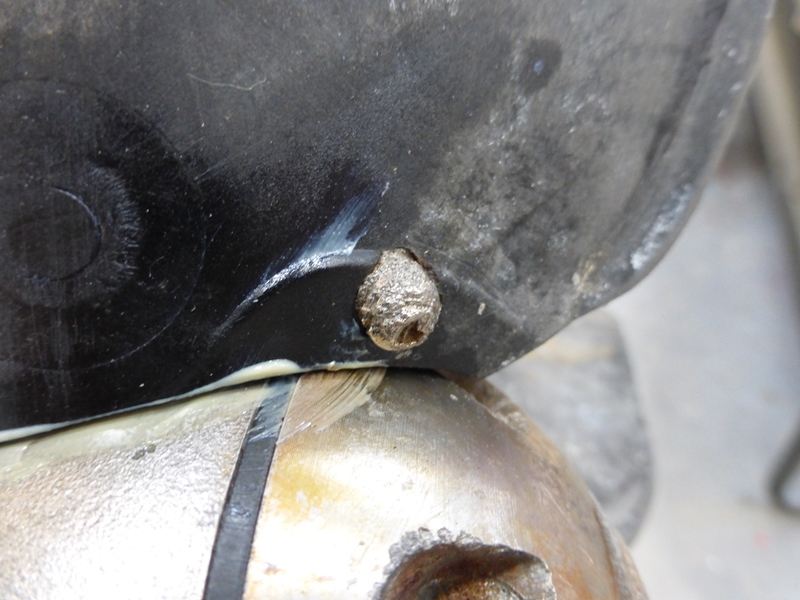
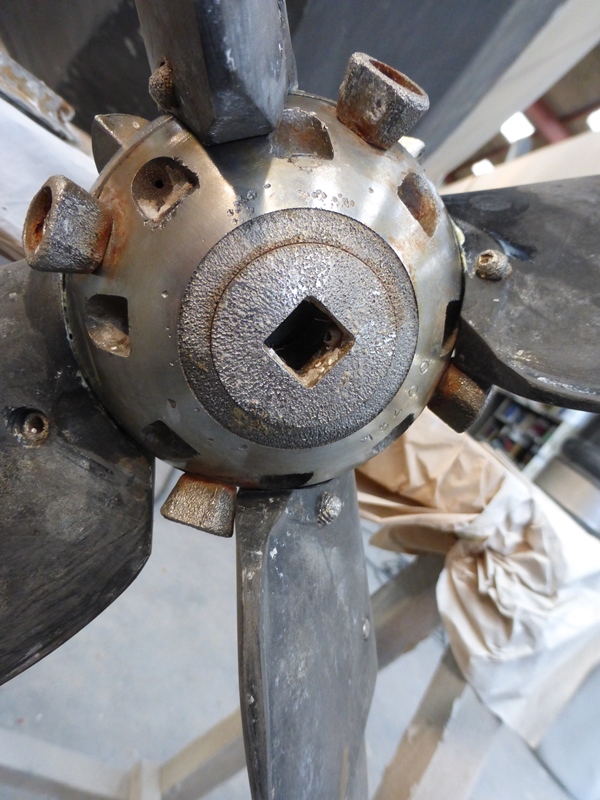
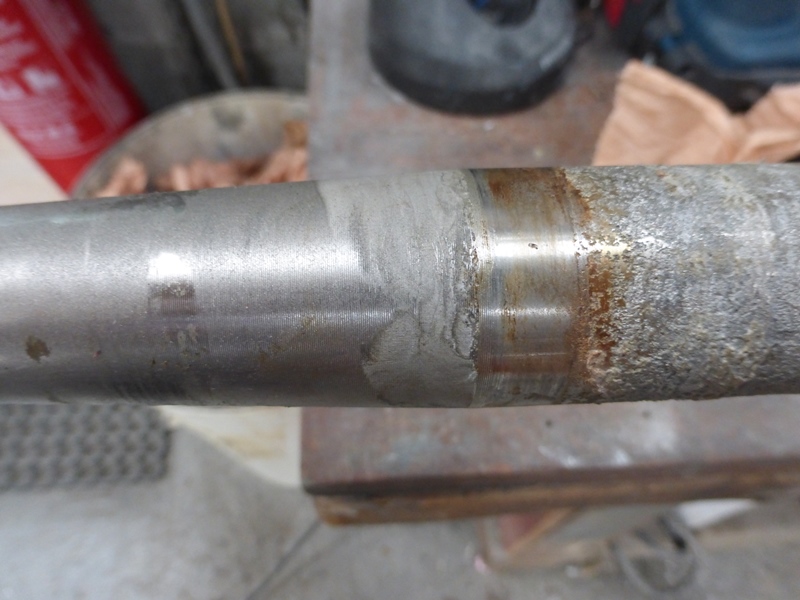
Below is a series of photo's showing severe corrosion from an external source:
Corrosion Evasion, Part 2: Corrosion Risks in Stainless Steel and Aluminum
By Steve D'Antonio (https://www.proboat.com/author/steved/), Feb 11, 2026


(https://www.proboat.com/wp-content/uploads/2026/02/032705043.jpg)
Steve D’Antonio

Installing hardware on an aluminum spar requires careful measures to seal out water that can promote corrosion of aluminum and stainless if it becomes stagnant and oxygen starved, or set up galvanic action between the dissimilar metals.
We continue our primer on corrosion vulnerabilities of common marine metals from Part 1: Preventing Galvanic, Stray-Current Corrosion (https://www.proboat.com/2026/01/preventing-galvanic-stray-current-corrosion/) in Professional BoatBuilder No. 212.
Stainless Steel


Since its accidental discovery nearly 100 years ago, stainless steel has become a fixture in everything from automobile and household appliance manufacturing to skyscraper trim and turbine blades. Of course, it’s also well known to boatbuilders, yards, and owners. The average vessel is simply riddled with a range of stainless-steel alloys that support everything from propellers (stainless-alloy propeller shafts) to headliners (stainless-steel staples).
The primary alloy in stainless steel is humble and familiar iron. To this mundane and plentiful element, more exotic alloys such as chromium and nickel are added, giving stainless steel its corrosion-resistant properties. The chrome enables the metal to form a tough oxide film as soon as, and for as long as, it’s exposed to oxygen. This film exists even while submerged as long as the water contains oxygen. Adding nickel increases the steel’s resistance to acid. Depending on the role it will be called upon to fill, architectural trim, cutlery, or bow rail for instance, di!ering primary elements in varying amounts are added, along with traces of more exotic materials such as columbium and tantalum.
(https://www.proboat.com/wp-content/uploads/2026/02/042705029.jpg)
Steve D’Antonio

To prevent carbide precipitation, and the corrosion it can facilitate, stainless steel that is to be welded must be of the low-carbon variety, typically identified by an L su!x, such as 304L or 316L.
Essentially, there are three subgroups of stainless steel: martensitic, which is often used for cutlery, many fasteners, and turbine blades; ferritic, used for automotive trim applications; and austenitic, which is best suited to the marine environment. Of the three, high nickel content (6% or more) is exclusive to austenitic or marine-grade stainless, which is further categorized into two popular alloys, designated by the American Iron and Steel Institute as 300 series. For recreational marine applications, the most common of these are 304 and 316. The alloy ratio used in 304 stainless steel consists of 18%-20% chromium and 8%-12% nickel, which is added to conventional carbon steel. For this reason, 304 stainless steel is often referred to as 18-8. The alloy ratios for 316 stainless steel, on the other hand, are 16%-18% chromium and 8%-12% nickel, as well as 2%-3% molybdenum. The final ingredient aids 316’s ability to resist a phenomenon referred to as crevice or pitting corrosion.
The most common variety of marine-grade stainless steel is 304. Its popularity is largely a function of expense; the alloying elements make 304 less costly to manufacture than 316. Nearly all commonly available stainless fasteners, from the smallest tapping screw to large nuts and bolts, are man- ufactured from 304 alloys. Fasteners, machine screws, nuts, and bolts manufactured from 316 are available, but must nearly always be special or- dered, which reflects their price.

(https://www.proboat.com/wp-content/uploads/2026/02/121009002.jpg)
Where stagnant water is in persistent contact with a stainless fastener, pitting and crevice corrosion will set in.
Steve D’Antonio

Stainless steel’s other primary weakness, crevice or pitting corrosion (while the distinction isn’t relevant for this discussion, there is a scientific dis- tinction between the two. See “The Power and Peril of Stainless Steel” in Professional BoatBuilder No. 146, page 48), occurs when the material is used in an oxygen-depleted environment. The tough, nearly impenetrable oxide film that forms as soon as stainless steel is exposed to air only re- mains intact as long as the metal is exposed to oxygen. If stainless steel is placed in an environment where it is starved of oxygen and it is exposed to water—fresh or salt—it becomes susceptible to crevice corrosion, which typically manifests itself as roughness, valleys, pitting, or even worm-like holes.
Thus, it’s preferable to avoid using stainless steel in applications where it is regularly exposed to stagnant or still water for extended periods. Ideally, high-quality silicon bronze, cupro-nickel, Inconel, or nonmetallic alternatives should be used, particularly for fasteners and raw-water plumbing. The fasteners used to secure struts, strainers, and other underwater hardware, for instance, should be bronze rather than stainless steel. If stainless steel must be used in such an application—a custom strut, shaft log, or their related fasteners for instance—they should be fabricated from the most corrosion resistant marine alloy available, 316L or 317L.

(https://www.proboat.com/wp-content/uploads/2026/02/101806006-scaled.jpg)
Crevice corrosion can manifest as “worm holes” even in shaft-grade stainless steel where bearings and stu!ng boxes keep oxygenated water from circulating.
Steve D’Antonio

Propeller shafts fall into a special category. Because they require exceptional strength and corrosion resistance, and are often unused for long peri- ods while exposed to stagnant water in shaft logs, shaft bearings, and stu"ng boxes, propeller shafts are typically fabricated from a proprietary stainless alloy that includes a host of other trace elements. These mixtures yield the ideal combination for the environment in which shafts operate. Trade names such as Aquamet, Aquatech, and Aqualoy, among others, are available in several strength and corrosion resistance grades. The most corrosion resistant of which, and therefore the most desirable, particularly for recreational applications where use and oxygen exposure are often limited, is designated as AQ22. Shafts made of this alloy and grade are as close as a boatbuilder can get to corrosion-proof where steel-based alloys are concerned. Shafts manufactured from ordinary stainless steel, on the other hand, even 316 alloy, frequently su!er from crevice corrosion at- tacks, occasionally within less than a year of being placed in service beneath shaft bearings and stu"ng box packing, where the damage cannot be easily observed.
Rust stains running across a deck or hull are unsightly, but in many cases are ignored or begrudgingly accepted as part of modern boat ownership. In some instances, they are a message about corrosion. If the staining is adjacent to stainless-steel hardware, it’s likely from crevice corrosion, whereby normally passive, corrosion-resistant stainless steel becomes active (the equivalent of rusting in mild steel) and is compromised. Insidious- ly, active stainless lacks the telltale flaking and scale associated with rusting mild steel. So, it’s wise to pay attention to staining and to eliminate its source.
To prevent such staining, sometimes referred to as “tea staining,” it’s important to understand the process by which it occurs. For stainless steel to remain rust free, it must be continuously exposed to oxygen, which allows it to replenish and maintain the tough oxide layer that resists rusting. Stainless steel used on deck is exposed to air, which has ample oxygen to maintain the protective layer. Even when used below the waterline, provid- ed the water moves freely and regularly, stainless steel may be exposed to enough dissolved oxygen to remain passive. But if it is exposed to an oxy- gen-starved environment such as stagnant water, it’s likely to enter an active state.
Where deck and above-the-waterline hull fittings are concerned, brown staining is usually from low corrosion resistance 304 stainless alloy and/or exposure of any stainless hardware to stagnant water. In the first case, short of replacing the hardware, there’s not much that can be done. In the latter case, there is a solution. If you look closely, you’ll see that the staining often emanates from the perimeter of, or under, the o!ending hard- ware where stagnant water is trapped and becomes oxygen depleted. This leads to “activation” of the stainless steel, and it begins to corrode. This phenomenon extends to fasteners as well; if the holes through which they penetrate decks, cabins, and hulls are filled with stagnant water, they will become active.
The solution for this problem involves hardware removal, thorough cleaning, dewaxing/degreasing with solvent, and fully bedding the reinstalled hardware in sealant. That means applying bedding compound not only to the areas where fasteners pass through the hardware but to the entire faying surface of a cleat, port light trim ring, grab rail flange, chock, or any other hardware. The bedding compound should squeeze out around the entire perimeter to create a watertight seal and exclude water that could migrate beneath the hardware base. Water exclusion is the key to prevent- ing staining.

(https://www.proboat.com/wp-content/uploads/2026/02/110309093-scaled.jpg)
Steve D’Antonio
Deck hardware and fittings in 304 stainless steel are particularly vulnerable to “tea staining,” where water can stagnate around fasteners and flanges. Cleaning and rebedding hardware is the best solution.
In addition to bedding, polishing otherwise rough or irregular stainless steel will minimize surface staining by removing micro-pits where corrosion gets its start. Avoiding water traps, in recesses where (often undersized) fasteners are installed, will also prevent crevice corrosion and staining. Fas- tener heads should fill the hole and countersink in any hardware. To that end, always use the largest screw shank that will fit, and fully bed it with sealer so water is less likely to be trapped between the head and hardware. Even then, fastener recesses can form water traps that lead to staining.
Insisting on 316 stainless alloy fasteners and polishing fastener heads will help reduce the incidence of staining.
Aluminum
It comes as a surprise to many that aluminum is among the most corrosion-prone metals. This may seem counterintuitive as it’s a common boat- building material, used for everything from spars and outboards, to deck hardware, and of course complete hull and deck structures. It’s also fre- quently applied as a sacrificial anode, which speaks to its vulnerable place on the galvanic series. In short, aluminum is a metal of many alloys and contradictions.

(https://www.proboat.com/wp-content/uploads/2026/02/061908048-scaled.jpg)
Steve D’Antonio
While the metal sits on the vulnerable extreme of the galvanic series, raw aluminum, especially in the 500 or 600 series, is naturally corrosion resistant and used extensively for workboat hulls.
Aluminum most commonly falls prey to two types of corrosion, galvanic and poultice. The former occurs when aluminum is placed in contact with another metal either directly or via an electrical connection, with both being immersed in an electrolyte to establish a galvanic cell (see “Corrosion Evasion: Part 1 (https://www.proboat.com/2026/01/preventing-galvanic-stray-current-corrosion/)” in Professional BoatBuilder No. 212, page 30)
That’s straightforward enough, but there are a host of other details essential to understanding how this works.
Perhaps most importantly, virtually all other metals, save two—zinc and magnesium—are nobler than aluminum, which means they all will cause aluminum to corrode when the two are in contact and exposed to moisture. The further the connected metal is from aluminum on the galvanic se- ries, the faster the aluminum will corrode. Consequently, while stainless steel will cause aluminum to corrode under these conditions, the rate is not especially quick, and as such the two are considered moderately compatible.


¥
(https://www.proboat.com/wp-content/uploads/2026/02/091711109-scaled.jpg)
Steve D’Antonio
Aluminum and copper-based alloys don’t mix. Where they must be part of an onboard system or structure, it’s vital that they be isolated from one another by a nonmetallic bushing or sleeve.
Copper and copper alloys, including brass and bronze, are located further from aluminum in the series, and are therefore far more harmful; they are considered entirely incompatible with aluminum. A bronze pump, for instance, mounted directly to an aluminum base plate, is a serious corrosion faux pas.
The connecting conductive electrolyte is typically seawater, but freshwater will also facilitate the galvanic reaction, albeit at a slower pace. Further- more, while immersion in the electrolyte completes the galvanic cell, it’s not essential; simple atmospheric humidity, spray, or rain will su"ce. You can prevent galvanic corrosion in two ways: by isolating aluminum from incompatible metals and/or using sacrificial anodes to protect submerged metals.
At breaches in the paint, water held against the underlying aluminum causes corrosion- forming aluminum hydroxide, a white byproduct.
Steve D’Antonio

Aluminum is also susceptible to poultice corrosion, sometimes referred to as “simple corrosion” because no other metals are involved. Here’s how it works. When exposed to air, aluminum almost instantly develops a tough transparent coating that serves as a corrosion inhibitor. Even underwater, provided it’s not stagnant, aluminum is exposed to enough dissolved oxygen for this coating to form. But where aluminum is starved of oxygen and remains exposed to moisture, the environment is ripe for poultice corrosion. Because the protective oxide coating cannot form without oxygen, the aluminum becomes active and corrodes, in the process forming aluminum hydroxide, a white byproduct resembling freezer-burned ice cream.
The most common instances of poultice corrosion occur when stagnant water is trapped against aluminum beneath blistered paint, under a gasket or insulator, beneath spreader boots, or even where it’s in contact with wood, which by its porous nature retains water. You can prevent it by ensur- ing aluminum is either continuously exposed to oxygen, or fully encapsulated, with the latter being practically impossible. For instance, if an alu- minum surface is painted, all that’s required for poultice corrosion to start is a single nick or scratch that breaches the coating. It’s particularly com- mon around hardware installations where antennas, brackets, pad eyes, or even a single screw head or canvas snap is enough to compromise the paint.

(https://www.proboat.com/wp-content/uploads/2026/02/082312011-scaled.jpg)
Aluminum sailing rig hardware kept in a moist environment under the rubber spreader boots is particularly vulnerable to corrosion.
Steve D’Antonio
Avoiding paint entirely is another approach, and aluminum alloys in the 5000 and 6000 series are naturally corrosion resistant, which suits them for a host of marine applications in their naked, unpainted form, including raw aluminum hull and deck structures. As noted earlier, when exposed to air, or oxygenated sea or fresh water, aluminum quickly develops a tough and corrosion-resistant oxide film. But there’s an aesthetic price to be paid for this durability. Raw aluminum weathers to a low-maintenance dull gray, and eventually dusty, gritty finish; fine for commercial, agency, or other utilitarian vessels but not attractive to many recreational users. To meet the market’s aesthetic standards, builders turn back to strong two-part paints and attempt to keep the water out.
Corrosion of Painted Aluminum
When it comes to painted aluminum structures, everyone loves the way it looks initially, however, it’s often a short-lived a!air as the paint and alu- minum rarely remain together for long.
It’s common to encounter unsightly blistered paint on aluminum hatches, spars, doors, cranes, hulls, cabins, and decks of boats only a few years in service. Early in my career I worked for a dealership that sold production powerboats equipped with painted aluminum arches. Invariably, the paint would blister, in some cases before the vessels were o#oaded from delivery trailers, warranty claims were dutifully submitted, which the builder, to its credit, promptly paid. To stem the outward flow of cash, they earnestly focused on the preparation and paint application processes, yet the prob- lem persisted.

(https://www.proboat.com/wp-content/uploads/2026/02/042912029-scaled.jpg)
Especially on aluminum spars, paint failures tend to propagate from hardware installations.
Steve D’Antonio
When a few years later I found myself managing a boatyard where painting aluminum spars was common, I was leery of experiencing the same sort of failure. To determine the cause of paint failure in the hopes of avoiding it, I reviewed old spars and other painted aluminum hardware and noted a revealing trend: Nearly all of the failures occurred adjacent to a hardware installation, a fastener, spreader, step, winch, track, or some other type of fitting, an area where the paint coating had necessarily been damaged or breached, in some cases microscopically. I observed repeatedly that once this occurs, water enters the rift, reacting with the aluminum. Initially the wound seems to be self-healing, with the oxide coating forming in the exposed gap, however small. But as the oxide forms, it lifts the edge of the paint, allowing water to migrate and stagnate further under the coating.
At this point, the chemical equation changes, and the moisture and aluminum in the absence of air promote poultice corrosion. The aluminum pits and produces copious amounts of aluminum oxide powder—or when wet, aluminum hydroxide. This further lifts the paint, causing familiar and un- sightly blistering. The lifted paint flake eventually falls o!, exposing raw, pitted aluminum, but deterioration doesn’t stop there. It begins anew at the perimeter interface between the paint and exposed aluminum. While it progresses slowly, once this process begins, it’s di"cult to impossible to stop it without removing all the blistered paint, thoroughly cleaning, priming, and repainting the surface.
I concluded that corrosion on painted aluminum spars was the result of breaches in the paint’s otherwise contiguous coating, frequently caused by hardware installations or impacts. In virtually every case, the blisters formed around hardware, fasteners, or damage, scratches, dings, etc. Paint fail- ures were particularly common around sharp or un-radiused edges where paint tends to run o! when applied and to su!er from abrasion and im- pact during vessel use.
